Introduction
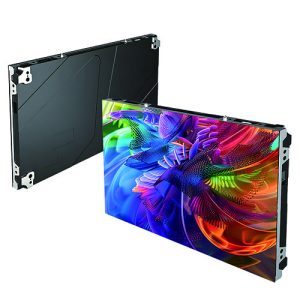
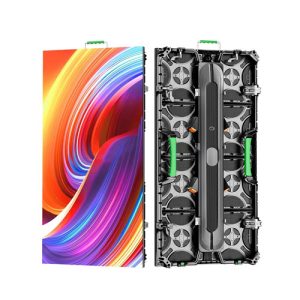
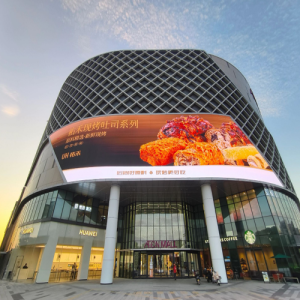
The LED display module is the fundamental core building block of all modern digital display systems. These highly engineered components are widely utilized across various demanding sectors, including large-scale advertising, professional broadcasting studios, bustling transportation hubs, premium retail environments, and corporate communication centers. As the global demand for ultra-high-resolution, seamless, and reliable digital display solutions continues to experience exponential growth, choosing the right LED display module becomes the most critical decision for any AV integrator. At VNICE, we engineer our modules to ensure superior visual performance, unparalleled color accuracy, and long-term operational stability, providing the perfect foundation for spectacular video walls.
Advanced Manufacturing & Strict Quality Control
To deliver a world-class LED display module, VNICE relies on state-of-the-art manufacturing infrastructure. Our production facilities are equipped with industry-leading Surface-Mount Technology (SMT) machinery specifically designed for precision assembly and high-efficiency output. By seamlessly integrating fully automated robotic processes with meticulous manual quality checks, we ensure that every single LED display module rolling off our line strictly adheres to the highest international quality standards.
Furthermore, our quality management system is rigorously comprehensive. Each module is subjected to multiple layers of intensive inspection. This includes advanced brightness and color calibration, prolonged thermal aging tests, and rigorous signal stability verification. This uncompromising quality control process significantly minimizes failure rates and ensures highly consistent performance across large-scale video wall installations, performing flawlessly even in demanding high-traffic public areas.
GOB Technology for Enhanced Protection
For projects requiring maximum durability, VNICE offers highly customizable GOB (Glue on Board) LED display modules. GOB technology represents a massive leap forward in LED surface protection. By applying a specialized transparent epoxy resin over the entire surface of the PCBA and LED diodes, we create an ultra-durable shield.
This advanced encapsulation technology significantly enhances the module’s resistance against external physical impacts, heavy dust accumulation, and destructive moisture. Consequently, GOB technology makes these modules the ideal hardware choice for environments where physical contact or harsh operating conditions are simply unavoidable. Moreover, GOB LED display modules dramatically improve surface flatness and uniformity while practically eliminating the risk of dead pixels, ensuring a smoother, safer visual experience perfectly suited for interactive touch displays and low-height retail installations.
Flexible Specifications for Diverse Applications
Understanding that every digital signage project presents unique architectural and visual challenges, VNICE ensures that our LED display modules are available in a highly comprehensive range of specifications:
-
Pixel Pitch: We offer ultra-fine and standard pitches including P1.2, P1.5, P1.8, P2, P2.5, P3, and P4.
-
Module Sizes (mm): Standardized dimensions are available in 320×160, 192×192, and 256×256, allowing for flexible cabinet assembly.
-
Brightness: Optimized indoor and semi-outdoor brightness levels ranging strictly from 600 to 1000 cd/㎡.
These highly flexible configurations empower B2B customers to select the perfect balance between high-definition resolution, optimal viewing distance, and overall project cost. Our fine pixel pitch modules (P1.2 – P2) are absolute perfection for indoor 4K/8K high-definition displays, while our larger pitches (P2.5 – P4) deliver highly cost-effective solutions for impactful semi-outdoor applications.
Global Supply & Expert Customization Services
VNICE is not just a manufacturer; we are a strategic partner supporting global clients with robust supply chain capabilities and elite professional customization services. Whether your complex project requires non-standard module sizes, bespoke brightness levels, or specific protective conformal coatings, our dedicated R&D and engineering teams will tailor the exact solutions to meet your unique project specifications.
Leveraging our established global logistics network, we guarantee timely and secure delivery worldwide. Furthermore, our expert technical support team provides comprehensive assistance throughout the entire integration, installation, and operation process. This end-to-end service commitment helps AV integrators drastically reduce project risks and achieve optimal, long-lasting visual results.
Frequently Asked Questions (FAQs)
1. What pixel pitches do your LED display modules support? We manufacture a comprehensive range of pixel pitches to suit various viewing distances, specifically featuring P1.2, P1.5, P1.8, P2, P2.5, P3, and P4 configurations for exceptional clarity.
2. What exactly is GOB technology in your LED modules? GOB stands for Glue on Board. It is an advanced protective technology where the LED module surface is sealed with a robust transparent resin, making it highly resistant to collisions, moisture, and dust while preventing dead pixels.
3. What are the standard physical dimensions of your modules? To ensure flexible cabinet design and assembly for our global B2B clients, we offer standard module dimensions in 320×160mm, 192×192mm, and 256×256mm formats.
4. What is the standard brightness range for these indoor modules? Our indoor LED modules are carefully calibrated to deliver a comfortable yet vibrant brightness range between 600 and 1000 cd/㎡ (nits), ensuring perfect visibility under typical indoor ambient lighting conditions.
5. Do you offer OEM/ODM customization for B2B bulk orders? Absolutely. We provide extensive professional customization services globally. Our engineers can tailor module dimensions, refresh rates, and protective features to meet your specific project requirements.
6. How do you guarantee the reliability of the LED modules? Every single module undergoes a strict quality control process, including automated optical inspection, color calibration, prolonged aging tests, and signal stability verification before global shipping.