Introduction to LED Video Wall Technology
In modern digital signage systems, LED video walls have become a core display technology. Moreover, they deliver high brightness, large-format images, and stable long-term performance. As a result, these systems are widely deployed in control centers, corporate environments, retail signage, and large public installations.
To better understand, it is important to examine how an LED video wall is built and operates as a unified system.
System Architecture: How an LED Video Wall Operates
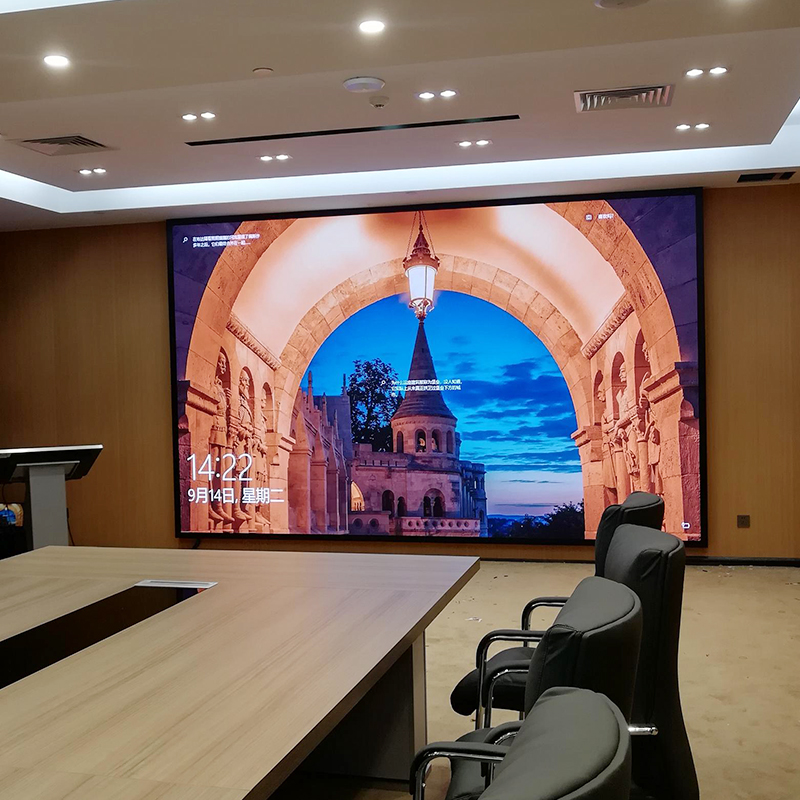
An LED video wall is a modular display system. Instead of a single screen, it consists of multiple LED cabinets arranged in a matrix.
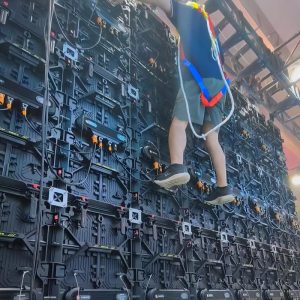
Each cabinet contains LED modules, a power supply, a receiving card, and mechanical structures for alignment. In addition, these components ensure precise calibration and seamless operation.
Display Mechanism
Every LED module includes thousands of RGB diodes, which form individual pixels. Then, a sending controller processes the input signal and distributes data to each receiving card. The receiving card subsequently maps pixel data to the correct physical LEDs.
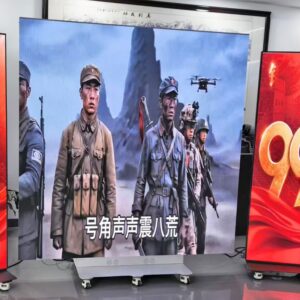
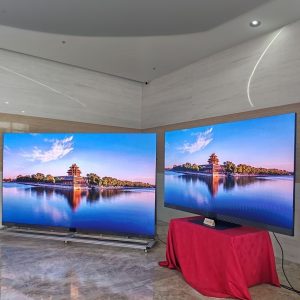
Because of this, the system provides uniform brightness, wide viewing angles, and zero bezels—unlike tiled LCD video walls, which suffer from visible borders.
Technical Advantages of LED Video Walls
1. True Seamless Visual Surface
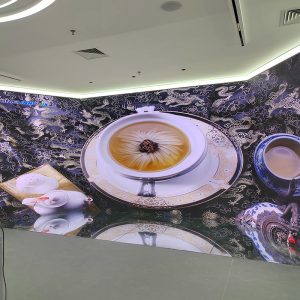
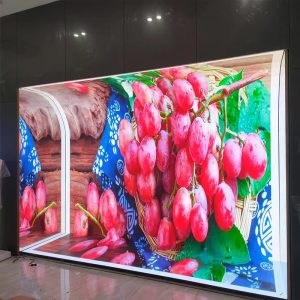
LED cabinets use precision alignment mechanisms. As a result, cabinet-to-cabinet gaps remain under 1 mm. Additionally, fine-pitch LED modules achieve pixel-level alignment, producing a continuous display surface without visible borders.
2. Modular Scalability and Custom Geometry
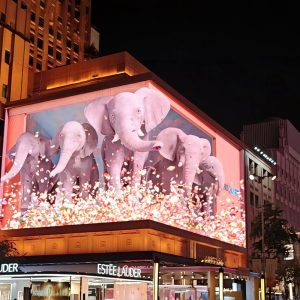
Engineers can scale an LED video wall to any resolution or physical dimension. Furthermore, the modular structure supports curved, concave, convex, and 90-degree corner installations. Therefore, this flexibility offers better engineering freedom than LCD or projection systems.
3. High Brightness and Environmental Adaptability
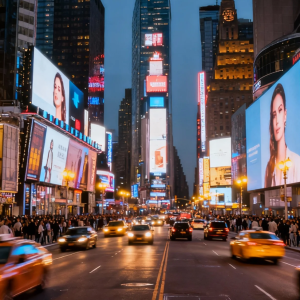
Direct-view LEDs generate high luminance levels, often exceeding 5,000–10,000 nits for outdoor models. Consequently, they maintain visibility in direct sunlight. Moreover, outdoor cabinets include IP-rated protection, heat dissipation systems, and light sensors for automatic brightness adjustment.
4. High Reliability for Continuous Operation
Commercial LED panels are engineered for 24/7 use. Specifically, they feature:
-
- Redundant power and data options
-
- Optimized heat dissipation through aluminum structures
-
- Long LED lifespan, often 50,000–100,000 hours
-
- Stable refresh rates (≥3840 Hz) to eliminate flicker during filming
Because of these features, LED walls maintain stability in mission-critical environments.
Engineering Considerations Before Selecting an LED Video Wall
Pixel Pitch and Viewing Distance
Pixel pitch directly affects resolution and the minimum visual distance.
-
- For example, fine pitch (P0.9–P1.8) suits control rooms and broadcast environments.
-
- Standard pitch (P2.5–P4) works for retail and indoor public displays.
-
- Large pitch (P4–P10+) is ideal for stadiums and outdoor billboards.
Thus, selecting the correct pitch improves clarity while optimizing costs.
- Large pitch (P4–P10+) is ideal for stadiums and outdoor billboards.
Indoor vs. Outdoor Requirements
Outdoor LED systems require higher brightness, weatherproof cabinets (IP65+), UV-resistant mask materials, and environmental protection for power and data interfaces. In contrast, indoor systems prioritize fine pixel pitch, low glare, and high color accuracy for close viewing.
Control System and Content Workflow
A complete LED video wall system includes a sending controller, receiving cards, calibration software, and input interfaces (HDMI, DP, SDI, CVBS, NDI, etc.). Additionally, modern processors support multi-window layouts, scaling, color calibration, and real-time source switching.
Application Suitability
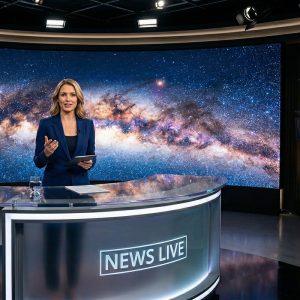
LED video walls are ideal for control rooms, corporate lobbies, retail environments, stadiums, and broadcast or XR virtual production. Because of their technical performance, they excel in environments requiring high brightness, long-term stability, and flexible installation options.
Engineering Support and Custom Solutions
VNICE provides end-to-end engineering support for LED video wall projects. Specifically, our services cover system design, cabinet customization, installation planning, on-site calibration, and long-term maintenance.
Therefore, contacting us for a technical consultation or detailed project evaluation is recommended.